


In many ports, power and water are taken for granted. It's infrastructure that is simply expected to work. Vessels dock, connect, and operations continue without receiving much attention.
But behind this seemingly simple routine lies an economic problem that is often underestimated.
Consumption isn't always measured correctly. The basis for invoicing is missing or inaccurate. Discrepancies are discovered too late—or not at all.
The result is simple: ports are losing money, without a full understanding of where or why.
An Invisible Revenue Loss
Traditionally, the management of power and water in ports has been characterized by manual processes. Meter readings are taken sporadically, sometimes based on estimates, and in some cases, not at all.
This creates several challenges simultaneously.
First, not all consumption is invoiced. Small discrepancies, individual connections, or temporary usage can easily fall outside the systems. Over time, this amounts to significant sums.
Second, errors arise in the underlying data. Manual processes are prone to both inaccuracies and inconsistencies, which in turn can lead to incorrect invoicing and time-consuming follow-up work.
And perhaps most importantly, the lack of real-time insight makes it difficult to detect anomalies. Leaks, equipment failures, or unauthorized use can go on for a long time before anyone reacts.
Fragmented Systems and Responsibility
A key cause of the problem is that metering, operations, and invoicing are often siloed.
Sensors or meters—where they exist—live in one system. Operations and monitoring are handled elsewhere. Invoicing occurs in a financial system that, at best, receives incomplete data.
This fragmentation makes it challenging to establish a seamless flow from actual consumption to a correct invoice.
In practice, this means that valuable data is either lost, must be interpreted manually, or is never used.
When Data Actually Turns into Revenue
Value is only realized when metering and commercialization are tightly integrated.
This is where the combination of sensor infrastructure and a platform comes in.
Companies like IoT Solutions provide the foundation—metering power, water, and other resources through robust, low-energy networks that cover entire port areas.
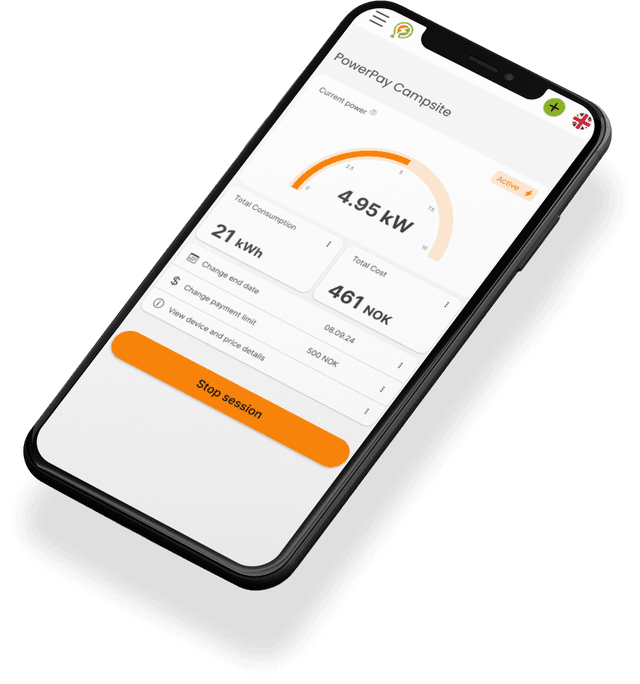
Layered on top are platforms like PowerPay, which don't just display data but transform it into something operational: a basis for invoicing.
When this link is established, something fundamental changes.
Consumption is recorded continuously. Data is validated automatically. Invoice line items are generated directly based on actual usage and can be sent straight into existing financial systems.
What was once a manual and uncertain process becomes an automated and auditable value chain.
From Reactive to Proactive Operations
The impact doesn't stop at invoicing.
When ports gain access to continuous data from their infrastructure, the way they operate also changes.
Anomalies can be detected the moment they occur. An unusual increase in water consumption might indicate a leak. A power connection behaving abnormally could signal a fault or misuse.
This provides a completely different foundation for operations—shifting from reacting to problems after the fact to addressing them before they escalate.
A Quiet Transformation
The digitalization of ports often revolves around major initiatives: electrification, autonomy, and sustainability.
But some of the most immediate value lies in the fundamentals—gaining control over the resources already being used every day.
Power and water are not just costs. They are also revenue streams, provided they are measured, understood, and invoiced correctly.
This is where IoT truly makes a difference. Not as an abstract technology layer, but as a tangible way to connect physical infrastructure with financial processes.
For ports that take this step, it's not just about technology.
It’s about control, precision—and ultimately, profitability.