
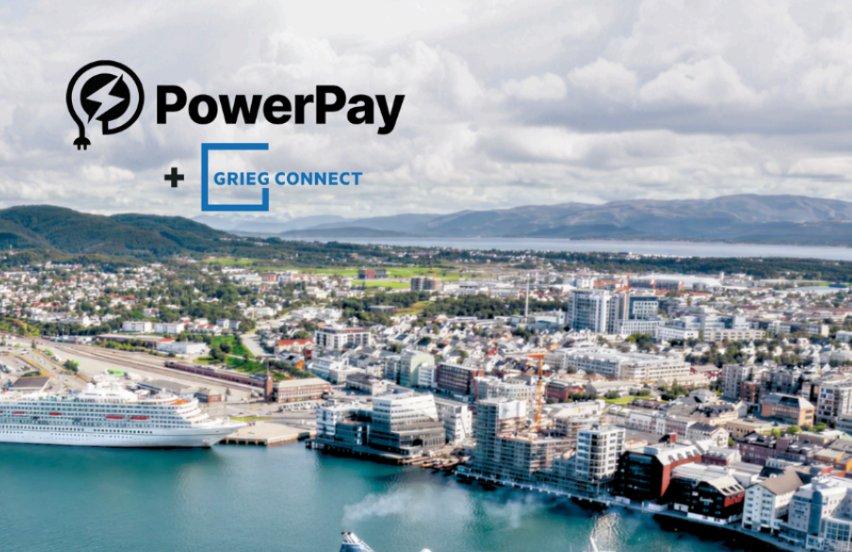
For many ports, supplying water is a necessary service. But behind a simple water outlet there is often a surprisingly manual process.
Someone has to register the consumption. Someone has to connect that consumption to the correct vessel, customer, or port call. Someone has to verify the numbers and prepare the invoice basis. When several vessels, services, and departures are handled in parallel, the process quickly becomes time-consuming — and vulnerable to errors.
The Port of Bodø wanted to remove that manual chain.
In June 2025, the port implemented a fully digital solution for automatic registration and invoicing of water supplied to cruise ships and Coastal Route vessels. The solution builds on the experience from the marina, where the Port of Bodø had already introduced digital water and power management in autumn 2024.
The result is a more efficient flow from quay to invoice:
outlet → measurement → customer → invoice basis
Water consumption is now measured, registered, linked to the correct customer, and prepared for invoicing automatically.
The Problem
Previously, water supply at the quay required manual follow-up.
When a vessel needed water, port staff could be sent out to unlock the outlet, read consumption, register the usage, verify the numbers, and connect the service to the correct vessel or port call. Afterward, the information still had to be prepared as part of the invoice basis.
For a single service, this may sound manageable. But in a busy port environment, with several vessels, customers, quay services, and departures happening in parallel, the process quickly becomes a drain on time and attention.
It also creates a risk of errors.
A missing reading, an incorrect registration, or consumption linked to the wrong customer can lead to extra follow-up before the port can invoice the service. Small manual steps become administrative friction when they have to be repeated across many port calls.
The Port of Bodø wanted a better way to manage this.
The Solution
With the new solution, water supply becomes part of a digital operational flow.
When a vessel docks and uses the water outlet, consumption is registered automatically. The data is sent to PowerPay, where the usage is connected to the correct customer and service. From there, the invoice basis is transferred digitally to Grieg Connect’s port management system, PORT.
By the time the vessel leaves the quay, the billing data is already prepared.
Instead of treating water supply as a separate manual process, the port can now manage it as part of the same digital workflow used for port operations and invoicing.
A Collaboration Between Port of Bodø, Grieg Connect, and PowerPay
The solution was developed through a collaboration between the Port of Bodø, Grieg Connect, and PowerPay.
Grieg Connect provides PORT, the port management system used by the Port of Bodø to manage arrivals, departures, customers, and invoicing processes.
PowerPay handles the connection between the physical service and the digital transaction. The platform manages measurement, consumption data, access, and the payment basis for the water outlets.
Together, the two systems connect port calls with actual measured consumption.
This means the Port of Bodø does not need to replace its existing port management system. Instead, PowerPay adds a digital layer around the physical infrastructure and sends the necessary consumption data into the port’s established operational flow.
Less Administration, Fewer Errors, Better Control
For the Port of Bodø, the value is not just technical. The main benefit is operational.
When consumption is registered automatically, staff no longer need to spend time on manual readings, post-registration, and repeated checks. The port gets a more accurate invoice basis because the data comes directly from measured usage.
That gives the port several concrete benefits:
- less manual administration
- lower risk of incorrect registration
- faster invoicing
- better overview of water consumption
- more efficient use of staff and resources
- a smoother experience for customers
For vessels using the service, the process is simple. They use the water they need, and the rest of the process happens automatically in the background.
No Trenching or New Cables
A key part of the solution is that it can be installed without major changes to the existing quay infrastructure.
For ports, this matters.
Quay facilities, water outlets, and technical installations are often spread across large areas. Traditional cable laying can be expensive, time-consuming, and disruptive. Digging trenches or pulling new cables across a port area is rarely simple.
With wireless communication, the water outlets can be connected to PowerPay without rebuilding the surrounding infrastructure.
This makes the solution easier to implement, easier to scale, and more realistic to roll out across different parts of the port area.
From Marina to Commercial Traffic
The Port of Bodø first implemented the digital solution in its marina in autumn 2024.
There, the port used PowerPay to manage water and power for leisure boats. The experience from the marina gave the port a practical foundation for expanding the same principles to larger vessels and commercial traffic.
In June 2025, the solution was extended to water supply for cruise ships and Coastal Route vessels.
This step-by-step approach is important. Digitalization works best when it starts with a clear operational problem, proves itself in daily use, and then scales to new areas.
For the Port of Bodø, the same basic platform can now support different types of customers and different types of measurable services — from leisure boats to large commercial vessels.
A Model for Future Port Services
Water supply is one example, but the principle is much broader.
Many port services are based on measurable resources: water, power, access, time, and consumption. When these services can be measured digitally and connected to the right customer, they can become part of a more automated and efficient value chain.
For the Port of Bodø, water supply has moved from a manual workflow to a digital service.
Instead of chasing readings and registrations after the fact, the port can work from live consumption data connected directly to the customer and port call. That gives the port better control and makes it easier to offer modern services to both leisure boats and commercial vessels.
PowerPay as a Platform for Measurable Services
PowerPay is designed for businesses that need to charge for measurable services such as power, water, and other physical infrastructure.
At the Port of Bodø, the platform registers water consumption and prepares the data for further processing in the port’s existing systems. This allows the port to keep using its established port management system while automating the manual work around physical service delivery.
The result is a more connected operation where infrastructure, consumption, customer data, and invoicing work together.
For ports and other infrastructure owners, this creates a clear opportunity: services that were previously difficult to manage manually can now become digital, measurable, and easier to invoice.
A Smarter Port Starts with Better Control Over Its Services
The Port of Bodø shows how ports can modernize one service at a time.
By combining automatic measurement, wireless communication, and integration with Grieg Connect’s PORT system, the port has turned water supply into a digital workflow. What used to require manual follow-up can now be handled automatically from the quay to the invoice basis.
The outcome is simple but powerful:
The port saves time. The data becomes more accurate. The customer experience improves. The service becomes easier to scale.
For ports looking to reduce administration and gain better control over measurable services, this is a practical example of how digitalization can create value in everyday operations.
Want to See How PowerPay Can Be Used in Your Port?
PowerPay can be used to digitalize and automate payment for services such as water, power, and other measurable resources.
Get in touch, and we’ll look at how the solution can be adapted to your port area, your customers, and your existing systems.